Python + Dataverse Series – #04: Create records in batch using Execute Multiple

Hi Folks,

This is continuation in this Python with Dataverse Series, in this blog post, we will see how can we create multiple records in a single batch using ExecuteMultiple in Python.

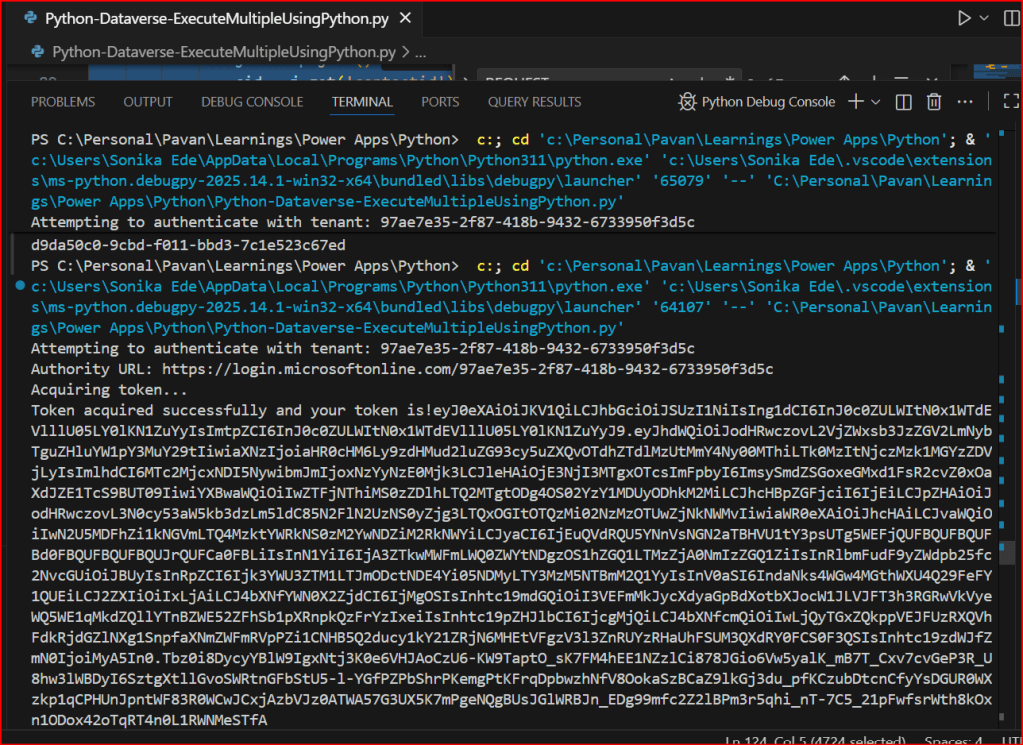
Please use the below code for the same…to make any calls using ExecuteMultiple…

import pyodbc
import msal
import requests
import json
import re
import time
# Azure AD details
client_id = '0e1c58b1-3d9a-4618-8889-6c6505288d3c'
client_secret = 'qlU8Q~dmhKFfdL1ph2YsLK9URbhIPn~qWmfr1ceL'
tenant_id = '97ae7e35-2f87-418b-9432-6733950f3d5c'
authority = f'https://login.microsoftonline.com/{tenant_id}'
resource = 'https://ecellorsdev.crm8.dynamics.com'
# SQL endpoint
sql_server = 'ecellorsdev.crm8.dynamics.com'
database = 'ecellorsdev'
# Get token with error handling
try:
print(f"Attempting to authenticate with tenant: {tenant_id}")
print(f"Authority URL: {authority}")
app = msal.ConfidentialClientApplication(client_id, authority=authority, client_credential=client_secret)
print("Acquiring token…")
token_response = app.acquire_token_for_client(scopes=[f'{resource}/.default'])
if 'error' in token_response:
print(f"Token acquisition failed: {token_response['error']}")
print(f"Error description: {token_response.get('error_description', 'No description available')}")
else:
access_token = token_response['access_token']
print("Token acquired successfully and your token is!"+access_token)
print(f"Token length: {len(access_token)} characters")
except ValueError as e:
print(f"Configuration Error: {e}")
except Exception as e:
print(f"Unexpected error: {e}")
#Get 5 contacts from Dataverse using Web API
import requests
import json
try:
#Full CRUD Operations – Create, Read, Update, Delete a contact in Dataverse
print("Making Web API request to perform CRUD operations on contacts…")
# Dataverse Web API endpoint for contacts
web_api_url = f"{resource}/api/data/v9.2/contacts"
# Base headers with authorization token
headers = {
'Authorization': f'Bearer {access_token}',
'OData-MaxVersion': '4.0',
'OData-Version': '4.0',
'Accept': 'application/json',
'Content-Type': 'application/json'
}
# Simple approach: create multiple contacts sequentially
# generate 100 contacts with different last names
contacts_to_create = [
{"firstname": "Ecellors", "lastname": f"Test{str(i).zfill(3)}"}
for i in range(1, 101)
]
create_headers = headers.copy()
create_headers['Prefer'] = 'return=representation'
created_ids = []
print("Creating contacts sequentially…")
for i, body in enumerate(contacts_to_create, start=1):
try:
resp = requests.post(web_api_url, headers=create_headers, json=body, timeout=15)
except requests.exceptions.RequestException as e:
print(f"Request error creating contact #{i}: {e}")
continue
if resp.status_code in (200, 201):
try:
j = resp.json()
cid = j.get('contactid')
except ValueError:
cid = None
if cid:
created_ids.append(cid)
print(f"Created contact #{i} with id: {cid}")
else:
print(f"Created contact #{i} but response body missing id. Response headers: {resp.headers}")
elif resp.status_code == 204:
# try to extract id from headers
entity_url = resp.headers.get('OData-EntityId') or resp.headers.get('Location')
if entity_url:
m = re.search(r"([0-9a-fA-F\-]{36})", entity_url)
if m:
cid = m.group(1)
created_ids.append(cid)
print(f"Created contact #{i} (204) with id: {cid}")
else:
print(f"Created contact #{i} (204) but couldn't parse id from headers: {resp.headers}")
else:
print(f"Created contact #{i} (204) but no entity header present: {resp.headers}")
else:
print(f"Failed to create contact #{i}. Status code: {resp.status_code}, Response: {resp.text}")
# small pause to reduce chance of throttling/rate limits
time.sleep(0.2)
if created_ids:
print("Created contact ids:")
for cid in created_ids:
print(cid)
except Exception as e:
print(f"Unexpected error during Execute Multiple: {e}")
print("Failed to extract Contact ID from headers.")

Please download this Jupyter notebook to work on it easily using VS Code.

https://github.com/pavanmanideep/DataverseSDK_PythonSamples/blob/main/Python-Dataverse-ExecuteMultipleUsingPython.ipynb

If you want to continue reading this series, follow along

Hope this helps..

Cheers,

PMDY

Python + Dataverse Series – Post #03: Create, Update, Delete records via Web API

Hi Folks,

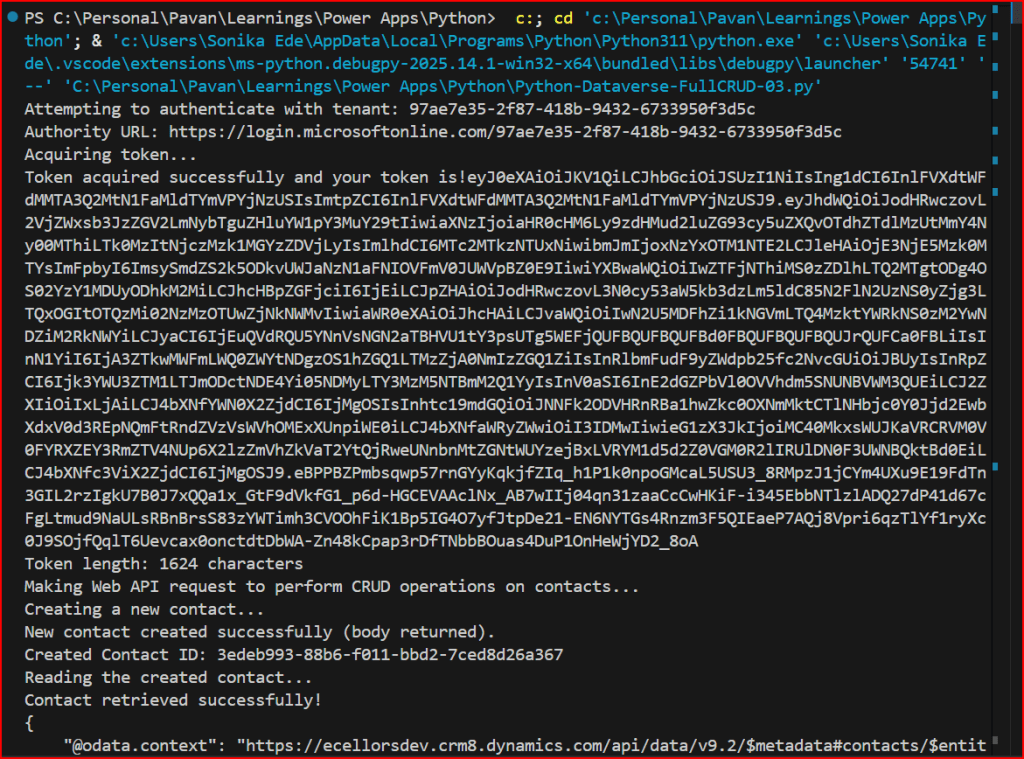
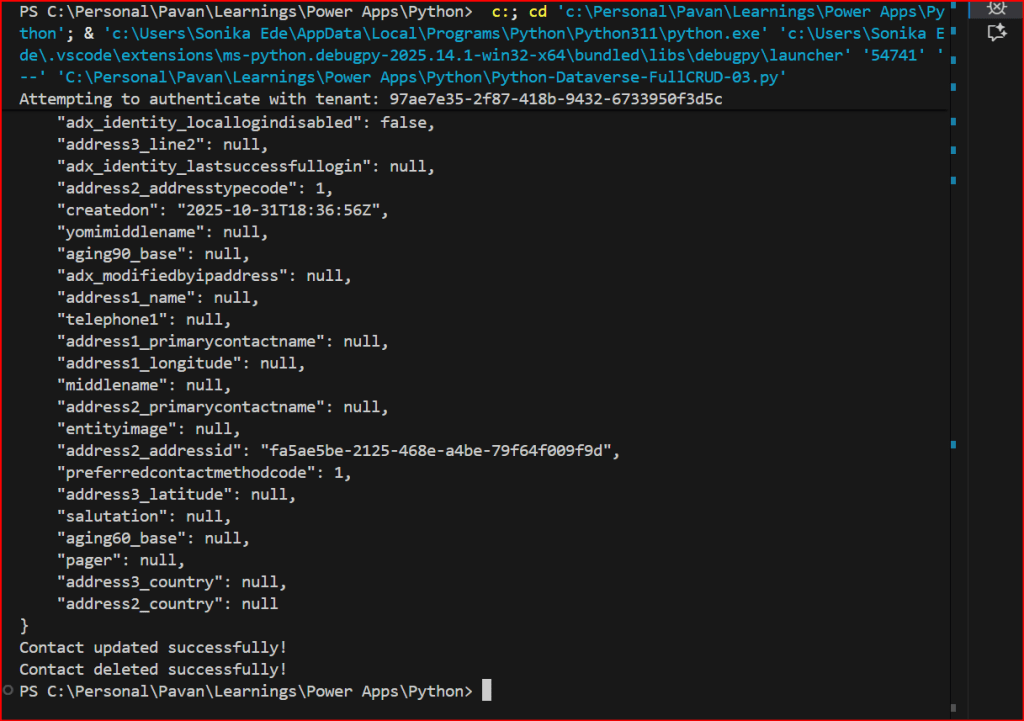
This is continuation in this Python with Dataverse Series, in this blog post, we will perform a full CRUD(Create, Retrieve, Update, Delete) in Dataverse using Web API.

Please use the below code for the same…to make any calls using WEB API to Dataverse.

import pyodbc
import msal
import requests
import json
import re
# Azure AD details
client_id = 'XXXX'
client_secret = 'XXXX'
tenant_id = 'XXXX'
authority = f'https://login.microsoftonline.com/{tenant_id}'
resource = 'https://XXXX.crm8.dynamics.com'
# SQL endpoint
sql_server = 'XXXX.crm8.dynamics.com'
database = 'XXXX'
# Get token with error handling
try:
print(f"Attempting to authenticate with tenant: {tenant_id}")
print(f"Authority URL: {authority}")
app = msal.ConfidentialClientApplication(client_id, authority=authority, client_credential=client_secret)
print("Acquiring token…")
token_response = app.acquire_token_for_client(scopes=[f'{resource}/.default'])
if 'error' in token_response:
print(f"Token acquisition failed: {token_response['error']}")
print(f"Error description: {token_response.get('error_description', 'No description available')}")
else:
access_token = token_response['access_token']
print("Token acquired successfully and your token is!"+access_token)
print(f"Token length: {len(access_token)} characters")
except ValueError as e:
print(f"Configuration Error: {e}")
print("\nPossible solutions:")
print("1. Verify your tenant ID is correct")
print("2. Check if the tenant exists and is active")
print("3. Ensure you're using the right Azure cloud (commercial, government, etc.)")
except Exception as e:
print(f"Unexpected error: {e}")
#Get 5 contacts from Dataverse using Web API
import requests
import json
try:
#Full CRUD Operations – Create, Read, Update, Delete a contact in Dataverse
print("Making Web API request to perform CRUD operations on contacts…")
# Dataverse Web API endpoint for contacts
web_api_url = f"{resource}/api/data/v9.2/contacts"
# Base headers with authorization token
headers = {
'Authorization': f'Bearer {access_token}',
'OData-MaxVersion': '4.0',
'OData-Version': '4.0',
'Accept': 'application/json',
'Content-Type': 'application/json'
}
# Create a new contact
new_contact = { "firstname": "John", "lastname": "Doe" }
print("Creating a new contact…")
# Request the server to return the created representation. If not supported or omitted,
# Dataverse often returns 204 No Content and provides the entity id in a response header.
create_headers = headers.copy()
create_headers['Prefer'] = 'return=representation'
response = requests.post(web_api_url, headers=create_headers, json=new_contact)
created_contact = {}
contact_id = None
# If the API returned the representation, parse the JSON
if response.status_code in (200, 201):
try:
created_contact = response.json()
except ValueError:
created_contact = {}
contact_id = created_contact.get('contactid') or created_contact.get('contactid@odata.bind')
print("New contact created successfully (body returned).")
print(f"Created Contact ID: {contact_id}")
# If the API returned 204 No Content, Dataverse includes the entity URL in 'OData-EntityId' or 'Location'
elif response.status_code == 204:
entity_url = response.headers.get('OData-EntityId') or response.headers.get('Location')
if entity_url:
# Extract GUID using regex (GUID format)
m = re.search(r"([0-9a-fA-F]{8}-[0-9a-fA-F]{4}-[0-9a-fA-F]{4}-[0-9a-fA-F]{4}-[0-9a-fA-F]{12})", entity_url)
if m:
contact_id = m.group(1)
created_contact = {'contactid': contact_id}
print("New contact created successfully (no body). Extracted Contact ID from headers:")
print(f"Created Contact ID: {contact_id}")
else:
print("Created but couldn't parse entity id from response headers:")
print(f"Headers: {response.headers}")
else:
print("Created but no entity location header found. Headers:")
print(response.headers)
else:
print(f"Failed to create contact. Status code: {response.status_code}")
print(f"Error details: {response.text}")
# Read the created contact
if not contact_id:
# Defensive: stop further CRUD if we don't have an id
print("No contact id available; aborting read/update/delete steps.")
else:
print("Reading the created contact…")
response = requests.get(f"{web_api_url}({contact_id})", headers=headers)
if response.status_code == 200:
print("Contact retrieved successfully!")
contact_data = response.json()
print(json.dumps(contact_data, indent=4))
else:
print(f"Failed to retrieve contact. Status code: {response.status_code}")
print(f"Error details: {response.text}")
# Update the contact's email
updated_data = { "emailaddress1": "john.doe@example.com" }
response = requests.patch(f"{web_api_url}({contact_id})", headers=headers, json=updated_data)
if response.status_code == 204:
print("Contact updated successfully!")
else:
print(f"Failed to update contact. Status code: {response.status_code}")
print(f"Error details: {response.text}")
# Delete the contact
response = requests.delete(f"{web_api_url}({contact_id})", headers=headers)
if response.status_code == 204:
print("Contact deleted successfully!")
else:
print(f"Failed to delete contact. Status code: {response.status_code}")
print(f"Error details: {response.text}")
except requests.exceptions.RequestException as e:
print(f"Request error: {e}")
except KeyError as e:
print(f"Token not available: {e}")
except Exception as e:
print(f"Unexpected error: {e}")
view raw FullCRUDWebAPI hosted with ❤ by GitHub

You can use the VS Code as IDE, copy the above code in a python file, next click on Run Python File at the top of the VS Code

Hope this helps someone making Web API Calls using Python.

If you want to try this out, download the Python Notebook and open in VS Code.

https://github.com/pavanmanideep/DataverseSDK_PythonSamples/blob/main/Python-Dataverse-FullCRUD-03.ipynb

Looking to continue following this series, don’t forget the next article in this series

Cheers,

PMDY

Python + Dataverse Series – #02 – use Datavese Web API using Python

Hi Folks,

This is in continuation to the previous blog post…if you haven’t gone through the earlier post on connecting to Dataverse using Python, please have a look here

Now, we will see how you can retrieve the records in Dataverse using Web API using Python…

  1. Follow the previous blog post for connecting to Dataverse using Python
  2. Once you get the access token via the TDS End point, we can invoke the Dataverse Web API using below code…
import pyodbc
import msal
import requests
import json
# Azure AD details
client_id = 'XXXX'
client_secret = 'XXXX'
tenant_id = 'XXXX'
authority = f'https://login.microsoftonline.com/{tenant_id}'
resource = 'https://XXXX.crm8.dynamics.com'
# SQL endpoint
sql_server = 'XXXX.crm8.dynamics.com'
database = 'XXXX'
# Get token with error handling
try:
print(f"Attempting to authenticate with tenant: {tenant_id}")
print(f"Authority URL: {authority}")
app = msal.ConfidentialClientApplication(client_id, authority=authority, client_credential=client_secret)
print("Acquiring token…")
token_response = app.acquire_token_for_client(scopes=[f'{resource}/.default'])
if 'error' in token_response:
print(f"Token acquisition failed: {token_response['error']}")
print(f"Error description: {token_response.get('error_description', 'No description available')}")
else:
access_token = token_response['access_token']
print("Token acquired successfully and your token is!"+access_token)
print(f"Token length: {len(access_token)} characters")
except ValueError as e:
print(f"Configuration Error: {e}")
print("\nPossible solutions:")
print("1. Verify your tenant ID is correct")
print("2. Check if the tenant exists and is active")
print("3. Ensure you're using the right Azure cloud (commercial, government, etc.)")
except Exception as e:
print(f"Unexpected error: {e}")
#Get 5 contacts from Dataverse using Web API
import requests
import json
try:
print("Making Web API request to get contacts…")
# Dataverse Web API endpoint for contacts
web_api_url = f"{resource}/api/data/v9.2/contacts"
# Set up headers with authorization token
headers = {
'Authorization': f'Bearer {access_token}',
'OData-MaxVersion': '4.0',
'OData-Version': '4.0',
'Accept': 'application/json',
'Content-Type': 'application/json'
}
# Add query parameters to get only 5 contacts with specific fields
params = {
'$top': 5,
'$select': 'contactid,fullname,emailaddress1,telephone1,createdon'
}
# Make the GET request
response = requests.get(web_api_url, headers=headers, params=params)
if response.status_code == 200:
print("Web API request successful!")
contacts_data = response.json()
print(f"\nFound {len(contacts_data['value'])} contacts:")
print("-" * 80)
for i, contact in enumerate(contacts_data['value'], 1):
print(f"Contact {i}:")
print(f" ID: {contact.get('contactid', 'N/A')}")
print(f" Name: {contact.get('fullname', 'N/A')}")
print(f" Email: {contact.get('emailaddress1', 'N/A')}")
print(f" Phone: {contact.get('telephone1', 'N/A')}")
print(f" Created: {contact.get('createdon', 'N/A')}")
print("-" * 40)
else:
print(f"Web API request failed with status code: {response.status_code}")
print(f"Error details: {response.text}")
except requests.exceptions.RequestException as e:
print(f"Request error: {e}")
except KeyError as e:
print(f"Token not available: {e}")
except Exception as e:
print(f"Unexpected error: {e}")

You can use the VS Code as IDE, copy the above code in a python file, next click on Run Python File at the top of the VS Code

So, once you get the Access token, you can invoke the Web API using Python similar to how we did it using Javascript…

Please download the Python Jupyter Notebook if you want to work on this in VS Code

https://github.com/pavanmanideep/DataverseSDK_PythonSamples/blob/main/Python-Dataverse-WebAPI-GetData-02.ipynb

If you want to follow along in this series, please see below post

Hope this helps…

Cheers,

PMDY

Create a Custom Connector for your Web API from within Visual Studio

Hi Folks,

In this blog post, let’s see how we can create a custom connector without leaving our own Visual Studio for building a custom connector. Ideally for building any custom connector, we need to create them in https://make.powerapps.com or https://make.powerautomate.com. Last month Microsoft Announced that Power Platform is now a connected service in Visual Studio 2022. In this blog, we will utilize its capability…

Before diving deeper, let’s see what are the prerequisites..

  1. Visual Studio
  2. ASP .NET Web API knowledge
  3. Canvas Apps knowledge

Let’s get started..

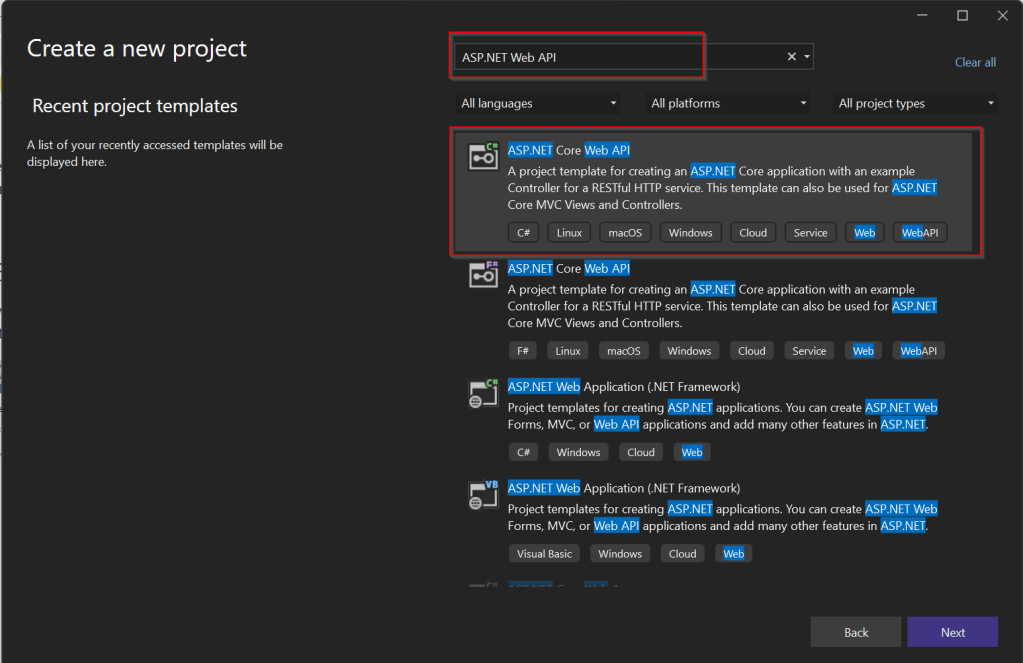
Step 1:

Create ASP.NET Web API Project in Visual Studio

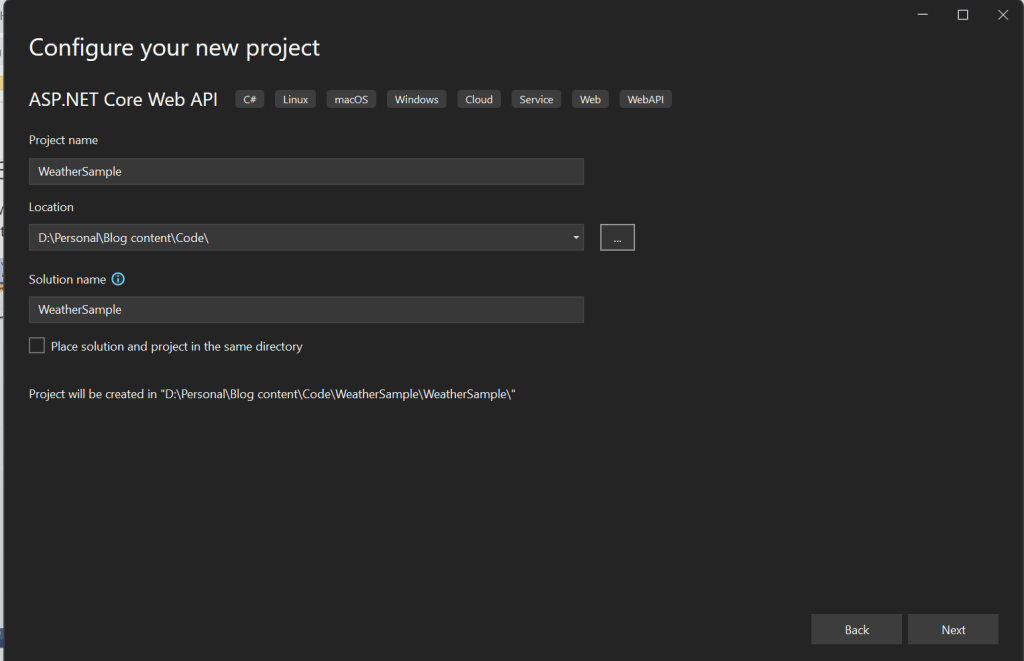
Step 2:Choose your option as below and click on Next..

Step 3:

Choose your next steps as below and click on Next to proceed, make sure to choose authentication type as None

Step 4:

Create a ASP.NET Core Web API Project

Step 5:

By adding Power Platform as a service dependency, you can update an existing custom connector, or create a new one from your API.

If you want to expose your local running API to a public endpoint, I prefer using Dev Tunnels feature of Visual Studio…

That’s it, you have started running your API.

Step 6:

Now let’s create a Mobile App with Power Apps…with the same login you have used for the Visual Studio to create a custom connector..

Step 7:

First check if Custom Connector has been created in your tenant and authenticate the connection….navigate to https://make.powerapps.com and click on Discover at the left of the page….and then click on Custom Connectors, you should see a connector which we created from Visual Studio….nice isn’t it…

Step 8:

All you need to create a connection by clicking on the + sign available..

Once connected, now try creating a mobile Canvas App..

In the Canvas App, try adding data…and search for Weather Sample which you created, you should see something like below…

Step 9:

Once the web API is running in your development environment, you can debug in real time and even Hot Reload your code.

References:

https://learn.microsoft.com/en-us/aspnet/core/test/dev-tunnels?view=aspnetcore-7.0#create-a-tunnel

Thank you for reading…

Cheers,

PMDY