Power Platform Tools | Developer Toolkit for Visual Studio 2019

Rajeev Pentyala's avatarRajeev Pentyala – Technical Blog on Power Platform, Azure and AI

Power Platform Tools for Visual Studio supports the rapid creation, debugging, and deployment of plug-ins.

You may note that Power Platform Tools for Visual Studio is similar in appearance and function to the Developer Toolkit for Microsoft Dynamics CRM 2013.

While Power Platform Tools for Visual Studio is similar in appearance and function to the Developer Toolkit for Microsoft Dynamics CRM 2013, Power Platform Tools is a new product and completely independent of the Developer Toolkit.

Power Platform Tools is not directly compatible with any templates or projects from the Developer Toolkit and vice versa.

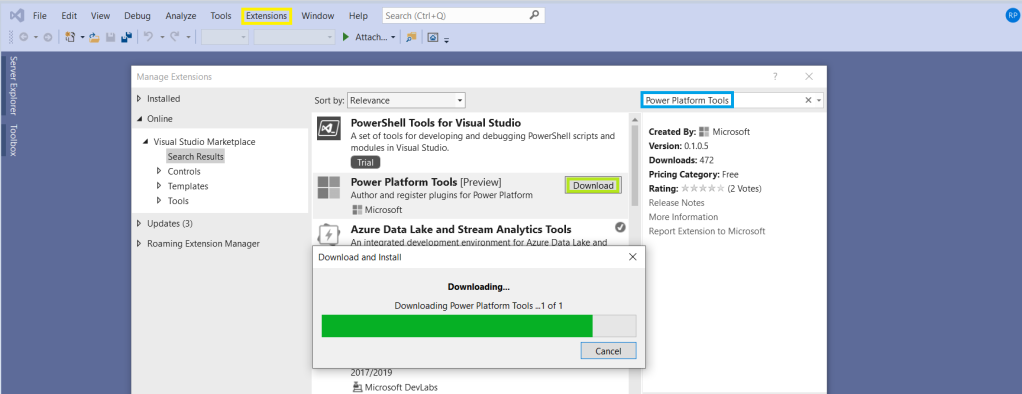
Steps to enable ‘Power Platform Tools’ extension in VS 2019:

  • From the Visual Studio 2019, click on ‘Extensions -> Manage Extensions’.
  • Expand the left navigation panel node Online > Visual Studio Marketplace. Search for “Power Platform Tools”, then click on ‘Download’.

  • Post Download, close all the Visual Studio instances and wait for few seconds…

View original post 112 more words

Granting Access to a Business unit Team via C#

Hi Folks,

I hope there isn’t any one who doesn’t know about security roles and access privileges being in Dynamics space. Most of the people should be aware of doing this via application, in this post, sharing one simple way to grant access to the records using C# code. Please use the below code to achieve the same.

private void ShareRecordtoBUTeamofRequestorUser(Guid Targetid, Guid TargetShare, IOrganizationService orgService)
        {
            try
            {
                if (Targetid != null && TargetShare != null)
                {
                    GrantAccessRequest grant = new GrantAccessRequest();
                    grant.Target = new EntityReference(MetadataHelper.VolunteerList.EntityLogicalName, Targetid);

                    PrincipalAccess principal = new PrincipalAccess();
                    principal.Principal = new EntityReference(MetadataHelper.Team.EntityLogicalName, TargetShare);
                    principal.AccessMask = AccessRights.ReadAccess;
                    grant.PrincipalAccess = principal;

                    try
                    {
                        //GrantAccessResponse grant_response = (GrantAccessResponse)orgService.Execute(grant);
                        orgService.Execute(grant);
                    }
                    catch (Exception ex)
                    {
                        throw ex;
                    }
                }
            }
            catch (Exception ex)
            {
                throw ex;
            }
        }

I have commented below lines in try block above and avoid using them because you will get an error for the same…

GrantAccessResponse grant_response = (GrantAccessResponse)orgService.Execute(grant);

An unhandled exception has occurred during execution of the plugin.
An error occured while getting default Team of Requestor BusinessUnit[A]Microsoft.Crm.Sdk.Messages.GrantAccessResponse cannot be cast to
[B]Microsoft.Crm.Sdk.Messages.GrantAccessResponse. Type A originates from ‘Microsoft.Crm.Sdk.Proxy, Version=9.0.0.0, Culture=neutral, PublicKeyToken=31bf3856ad364e35’ in the context ‘Default’ at location ‘C:\Microsoft.Crm.Sdk.Proxy.dll’. Type B originates from ‘Hisol.SCS.CRM.Plugins, Version=1.0.0.0, Culture=neutral, PublicKeyToken=bb2727b96c9cb15e’ in the context ‘LoadNeither’ in a byte array.

Thank you.

Cheers,

PMDY

Fetch more than 5000 records in one go…paging cookie way…but there’s a catch….

Hi Folks,

Hope some day or the other, every CRM Consultant will face this issue where they need to retrieve more than 5000 records in one go.

As every one in the internet suggests, paging cookie is the easiest way to achieve the same.

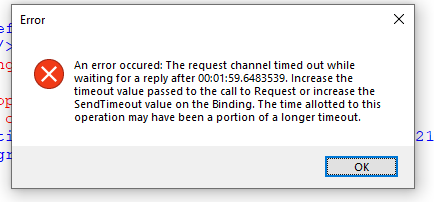
However here there is a catch…if you will use distinct=”false” no-lock=”true” along with your fetch query, you will never achieve the expected result and the timeout error keeps on popping up.

Pretty surely Microsoft have had documented this one, but I couldn’t find any relevant Microsoft article stating this. So thought of sharing this tip over my blog so that some day it will help some one. Here is the complete solution…

//Call the method to use Paging cookie and fetch multiple records in one go....
EntityCollection fetchDonationTransactionRecords = RetrieveAll(service, fetch);

/// <summary>
        /// RetrieveAll
        /// </summary>
        /// <param name="service"></param>
        /// <param name="fetchXml"></param>
        /// <returns></returns>
        public static EntityCollection RetrieveAll(this IOrganizationService service, string fetchXml)
        {
            EntityCollection finalCollection = new EntityCollection();
            int fetchCount = 5000;
            // Initialize the page number.
            int pageNumber = 1;
            // Specify the current paging cookie. For retrieving the first page, 
            // pagingCookie should be null.
            string pagingCookie = null;

            while (true)
            {
                // Build fetchXml string with the placeholders.
                string xml = CreateXml(fetchXml, pagingCookie, pageNumber, fetchCount);
                EntityCollection recordsCollection = new EntityCollection();
                FetchExpression expression = new FetchExpression(xml);
                recordsCollection = service.RetrieveMultiple(expression);

                // * Build up results here *

                // Check for morerecords, if it returns 1.
                if (recordsCollection.MoreRecords)
                {
                    // Increment the page number to retrieve the next page.
                    pageNumber++;
                    pagingCookie = recordsCollection.PagingCookie;

                    foreach (var record in recordsCollection.Entities)
                    {
                        finalCollection.Entities.Add(record);
                    }
                }
                else
                {
                    // If no more records in the result nodes, exit the loop. 
                    if (finalCollection.Entities.Count >= 5000)
                    {
                        foreach (var record in recordsCollection.Entities)
                        {
                            finalCollection.Entities.Add(record);
                        }
                    }
                    else
                    {
                        finalCollection = recordsCollection;
                    }
                    break;
                }
            }
            return finalCollection;
        }

Hope this helps…that’s it for today…be safe & happy CRM’ing….

Cheers,

PMDY

Cancel the save based on the result of an asynchronous operation

In 2017, Natraj Yegnaraman shared a clever method to cancel the save of a form. His approach was to cancel the save before the asynchronous operation and then retrigger the save if needed after the asynchronous operation is resolved. You can find all the details on the following link. This approach is explained by the […]

Cancel the save based on the result of an asynchronous operation

Are you still using WS-Trust Auth and OrganizationServiceProxy…then it is time to change …

Hi Folks,

Microsoft had recently announced on docs.microsoft.com that using WS-Trust authentication security protocol to connect to your Common Data Service had been deprecated.

So what does this mean??

Firstly you need to note that this only applies to client applications that connect to CDS.

It does not impact your custom plug-ins, workflow activities, or on-premises/IFD service connections.

Below are the places where you need to replace them…

If your code uses Username & Password for authenticating with Common Data Service or an application, you are likely using the WS-Trust security protocol.

  • If you are using the OrganizationServiceProxy  class at all in your code, you are using WS-Trust.
  • If you are using CrmServiceClient.OrganizationServiceProxy  in your code, you are using WS-Trust.

Check the following:

  1. If your client applications using Microsoft.Xrm.Sdk.Client.OrganizationServiceProxy:

         Action Required:

        Replace all occurrences of the type OrganizationServiceProxy with  the IOrganizationService interface

      2.                            using CrmServiceClient with the “Office365” authentication type:

          Action Required:

          Switch over to using an OAuth based connection string, Note that LoginPrompt can be set to “never” to simulate the way that the Office 365 behavior worked. Please note that the App ID and Redirect URI should be created in AAD in your tenant.

Few points to note before we conclude:

  • An update to Microsoft.CrmSdk.XrmTooling.CoreAssembly is available for download through NuGet package that includes auto redirect support. This library will redirect an authentication type of Office365 to OAuth.
  • If you were not able to login even using OAuth, check if MultiFactor Authentication/conditional access is enabled, if so consider registering application user (Service Principal) in Azure Active Directory.


References:

CDS/CRM SDK – WS-Trust auth and OrganizationServiceProxy Deprecated

Use of Office365 authentication with the WS-Trust security protocol


If you still have issue, don’t hesitate to comment here…or reach to community using this link…

Cheers,

PMDY


Pro-grammatically create Document location records in SharePoint Online from Dynamics Customer Engagement Online without using native integration

Hi Folks,

Have you ever got a requirement to specifically create records in SharePoint without using the out of the box CRM-Sharepoint integration, then your were at right place and this post is going  absolutely help you with your requirement.

With the out of box integration, we will be able to create records in SharePoint when we navigate to OPEN LOCATION under Document Associated grid. But this adds record GUID to name of the record being created. But in our case, we only want the document location record to be created  with the name of the record. Please use the below code…all you need is Tenant ID, Resource ID, Client ID, Client Secret and your SharePoint domain and URL.

This approach uses Access token approach using the SharePoint based Add-in.

Steps to create SharePoint based Add-in. Navigate to below URL…

Ex: [Site Collection URL]/_layouts/15/AppRegNew.aspx0

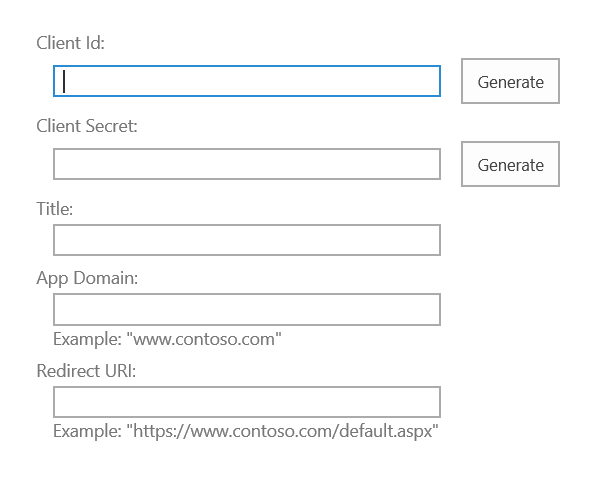
AppRegNew Form

At this point, you’ll need to fill in the following details,

Name Description
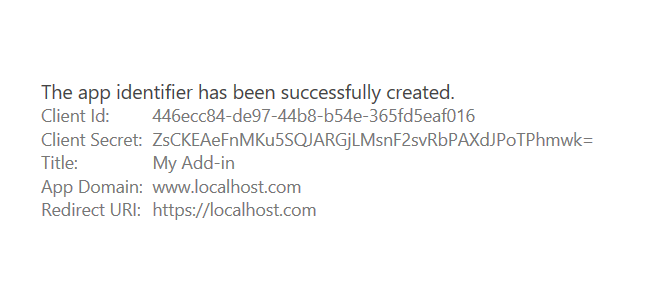
Client Id Click Generate unique client id for your add-in. It’s a GUID which will be used to identify your add-in.
Client Secret Acts like a password for your add-in. It will include some special characters as well. So while using it, we have to encode the same first.
Title The name of your add-in that will be displayed to the end user.
App Domain For provider-hosted add-in, this will be the domain where, the add-in is hosted. For token generation add-in, fill in any value. Make sure, not to include protocols(https) or slashes(/).
Redirect URI For provider-hosted add-in, fill in the redirect URL. For token generation add-in, fill in any value.

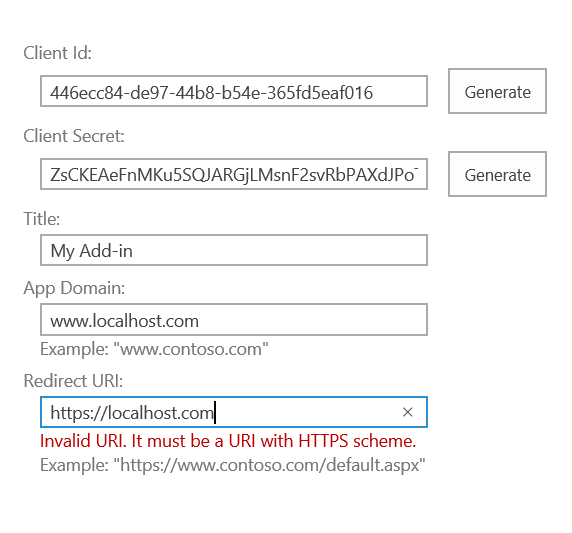
Once you have filled in all the below details, hit Create to register the add-in1

Register SharePoint Add-in

    • You will be navigated to a page displaying the details of your add-in. Save Client Id & Client Secret for future references(Don’t forget this step as you won’t be able to navigate to this page to view details later)2                                  SharePoint Add-in Identifier
    • Grant permission to an add-in

      Now that the identifier is created, we need to grant the necessary permission for it to perform any action. In this example, I’ll demonstrate how to grant full control access on a Site Collection.

      • Navigate to
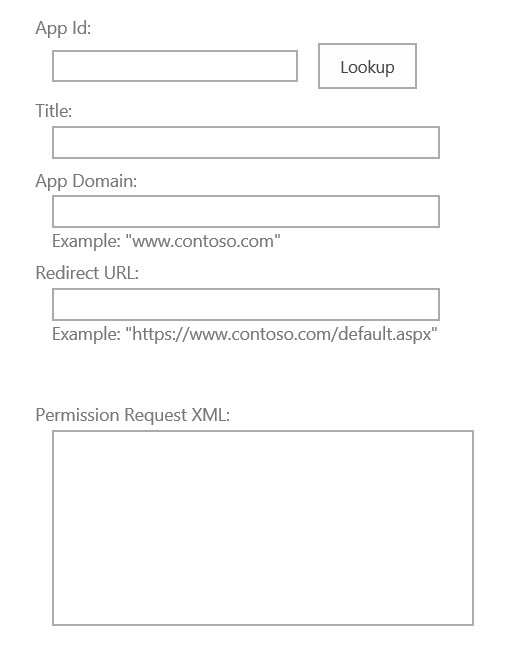
        [Site Collection URL]/_layouts/15/AppInv.aspx

        3

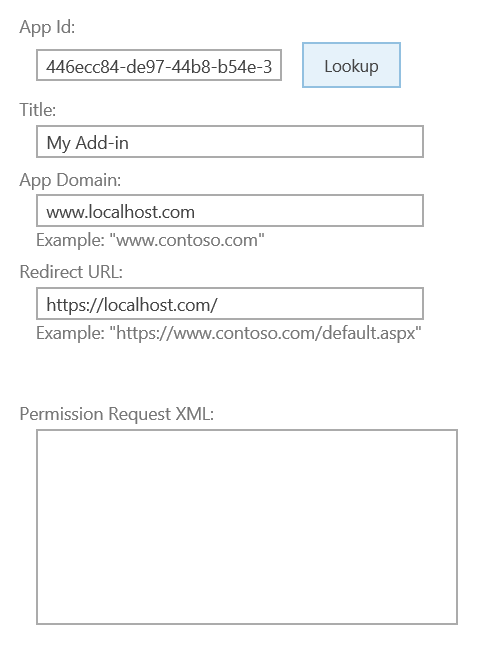
      • Enter your Client Id value in the App Id option and hit the Lookup button. Details of your add-in will be displayed automatically.4
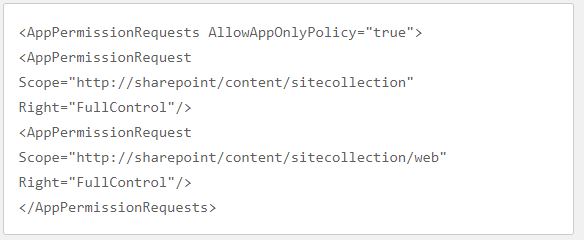
      • Now this is crucial, you need to give permissions to your app. In the option, Permission Request XML, let’s write the below XML code to grant our add-in full control on the given site collection.Capture
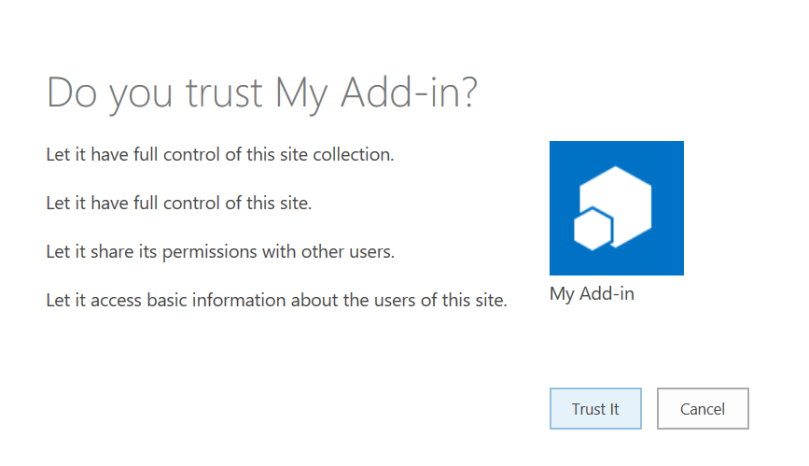
      • Just hit the Create button. You will now be prompted to trust the add-in for all the permissions that it requires.5                                      Trust SharePoint Add-In
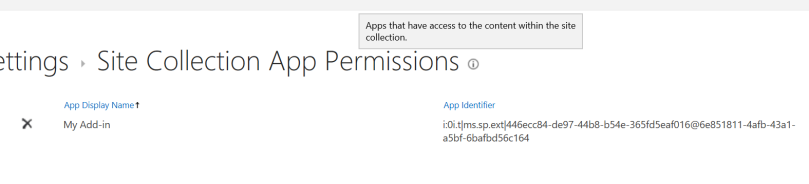
      • Hit the Trust It to grant the requested accesses. You can navigate to the following URL to also confirm that the permission has been assigned to the add-in.
        [Site Collection URL]/_layouts/15/appprincipals.aspx

        6

    • Now once you have created the app in SharePoint, you need to get the access token to perform CRUD Operations in SharePoint using REST API.
    • For testing purpose, you can use either POSTMAN or a console application…I have written the approach in both the ways.
    • For retrieving Tenant ID firstly using postman..
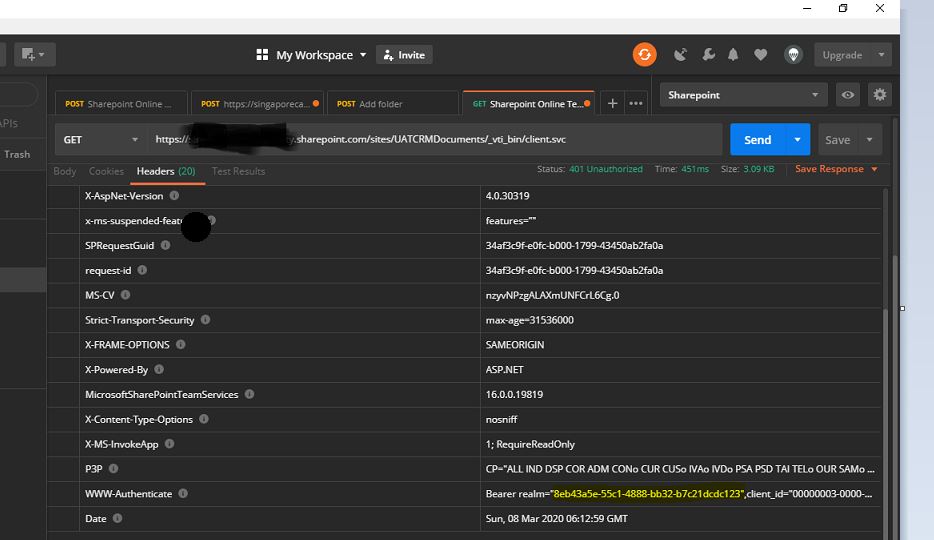
    • Perform a GET Request to the following URL..
    • [Site Collection URL]/_vti_bin/client.svc
    • After entering the above URL in the text-box in the URL text-box. We will get the Unauthorized exception on accessing the information. Because SharePoint Online is very much secured and that doesn’t allow anonymous users to access the information for their site. The below is the error message response, after sending the request. Highlighted is your Tenant ID..note it down..Capture1
    • Instead you can use the below C# code to get the Tenant ID details:public string GetTenant(string stGetTenantDetailsUrl)
      {
      WebRequest myWebRequest;
      string tenantID = string.Empty;
      string resourceID = string.Empty;
      string accessToken = string.Empty;myWebRequest = WebRequest.Create(stGetTenantDetailsUrl);
      myWebRequest.Method = “GET”;
      myWebRequest.Headers.Add(“Authorization”, “Bearer”);
      WebResponse myWebResponse = null; ;
      try
      {
      myWebResponse = myWebRequest.GetResponse();
      return tenantID;
      }
      catch (System.Net.WebException ex)
      {
      //get the Web exception and read the headersstring[] headerAuthenticateValue = ex.Response.Headers.GetValues(“WWW-Authenticate”);
      if (headerAuthenticateValue != null)
      {foreach (string stHeader in headerAuthenticateValue)
      {
      string[] stArrHeaders = stHeader.Split(‘,’);
      //loop all the key value pair of WWW-Authenticate
      foreach (string stValues in stArrHeaders)
      {if (stValues.StartsWith(“Bearer realm=”))
      {
      tenantID = stValues.Substring(14);
      tenantID = tenantID.Substring(0, tenantID.Length – 1);
      }
      if (stValues.StartsWith(“client_id=”))
      {
      //this value is consider as resourceid which is required for getting the access token
      resourceID = stValues.Substring(11);
      resourceID = resourceID.Substring(0, resourceID.Length – 1);
      }
      }}

      }

      return tenantID;//your tenant ID
      }
      }

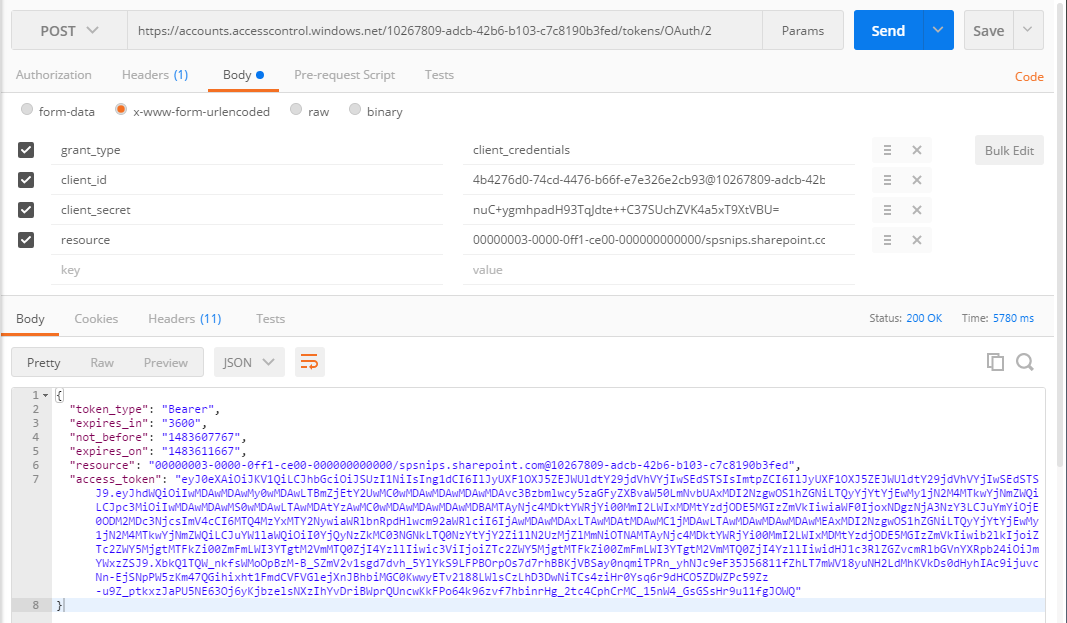
    • Next step is to get the Access token..from Postman..

                                         Generate the Access Token

      In response header, we will get WWW-Authenticate as one of the header and that contains the necessary information required for next step. The realm value contains the tenant id for the SharePoint Online site and clientid value contains the resource information (we’ll use it later).

      Key Syntax Value
      Content-Type application/x-www-form-urlencoded application/x-www-form-urlencoded

      Body

      Key Syntax Value
      grant_type client_credentials client_credentials
      client_id ClientID@TenantID 4b4276d0-74cd-4476-b66f-e7e326e2cb93@10267809-adcb-42b6-b103-c7c8190b3fed
      client_secret ClientSecret nuC+ygmhpadH93TqJdte++C37SUchZVK4a5xT9XtVBU=
      resource resource/SiteDomain@TenantID 00000003-0000-0ff1-ce00-000000000000/spsnips.sharepoint.com@10267809-adcb-42b6-b103-c7c8190b3fed
      • After applying the configuration, click Send button. That will returns the response with the Access Token.

      Fig 7: Postman response contains Access Token

      You can use the below C# code to generate access token

      public string GetAuthorisationToken(string stGetAccessTokenUrl, string stSiteDomain, string tenantID, string resourceID, string stClientID, string stClientSecret)
      {

      string accessToken = string.Empty;
      stGetAccessTokenUrl = string.Format(stGetAccessTokenUrl, tenantID);

      WebRequest request = WebRequest.Create(stGetAccessTokenUrl);

      request.ContentType = “application/x-www-form-urlencoded”;
      request.Method = “POST”;

      string postData = “grant_type = client_credentials” +
      “&client_id =” + WebUtility.UrlEncode(stClientID + “@” + tenantID) +
      “&client_secret =” + WebUtility.UrlEncode(stClientSecret) +
      “&resource =” + WebUtility.UrlEncode(resourceID + “/” + stSiteDomain + “@” + tenantID);

      byte[] byteArray = Encoding.UTF8.GetBytes(postData);
      // Set the ContentType property of the WebRequest.
      request.ContentType = “application/x-www-form-urlencoded”;
      // Set the ContentLength property of the WebRequest.
      request.ContentLength = byteArray.Length;
      // Get the request stream.
      Stream dataStream = request.GetRequestStream();
      // Write the data to the request stream.
      dataStream.Write(byteArray, 0, byteArray.Length);
      // Close the Stream object.
      dataStream.Close();

      try
      {
      using (WebResponse response = request.GetResponse())
      {
      dataStream = response.GetResponseStream();
      // Open the stream using a StreamReader for easy access.
      StreamReader reader = new StreamReader(dataStream);
      // Read the content.
      string responseFromServer = reader.ReadToEnd();
      // Clean up the streams.
      reader.Close();
      dataStream.Close();
      //Get accesss token
      accessToken = “access_token\”:\””;
      int clientIndex = responseFromServer.IndexOf(accessToken, StringComparison.Ordinal);
      int accessTokenIndex = clientIndex + accessToken.Length;
      accessToken = responseFromServer.Substring(accessTokenIndex, (responseFromServer.Length – accessTokenIndex – 2));

      return accessToken;

      }
      }
      catch (WebException wex)
      {
      HttpWebResponse httpResponse = wex.Response as HttpWebResponse;
      createlog(_service, “Error occured” + wex.ToString());
      throw new InvalidPluginExecutionException(“Exception occured while retrieving Access Token” + wex.ToString());

      }

      }

      Once we are received the access token, you were all set and we got the authorization to access the SharePoint data based on the permission applied in Grant Permission of Add-In .

      So now we would implement our logic to create folders in plugin…make sure we should be passing the Access token received while accessing share point.

      public void CreateFolder(string sharePointSite, string token, string library, string folder,Guid entityID)
      {
      string result = string.Empty;
      StringBuilder sb = new StringBuilder();
      sb.Append(sharePointSite);
      sb.Append(“_api/web/GetFolderByServerRelativePath(decodedUrl='”);
      sb.Append(library);
      sb.Append(“‘)/Folders”);
      Uri uri = new Uri(sb.ToString().Replace(“{“, “”).Replace(“}”, “”));
      HttpWebRequest wreq = (HttpWebRequest)WebRequest.Create(uri);
      wreq.Headers.Add(“Authorization”, “Bearer ” + token);
      wreq.Method = “POST”;
      wreq.ContentType = “application/json”;
      string postData = “{‘ServerRelativeUrl’:’folder’}”;
      postData = postData.Replace(“folder”, folder);
      byte[] byteArray = Encoding.UTF8.GetBytes(postData);
      wreq.ContentLength = postData.Length;
      Stream dataStream = wreq.GetRequestStream();
      dataStream.Write(byteArray, 0, byteArray.Length);
      dataStream.Close();
      WebResponse wresp = null;
      try
      {
      wresp = wreq.GetResponse();
      using (wresp = wreq.GetResponse())
      {
      dataStream = wresp.GetResponseStream();
      StreamReader reader = new StreamReader(dataStream);
      string responseFromServer = reader.ReadToEnd();
      reader.Close();
      }
      }
      catch (WebException wex)
      {
      HttpWebResponse httpResponse = wex.Response as HttpWebResponse;
      createlog(_service, “Error occured” + wex.ToString());
      throw new InvalidPluginExecutionException(“Exception occured while creating record” + wex.ToString());
      }
      }

  • You can place the Client ID, Client Secret, Sharepoint domain name in Unsecure configuration in Plugin for easier movement of code to other environment.
  • Entire code is available here…you can grab it…
  • Hope this helps some one looking out integrating Dynamics CRM Online with SharePoint online without relying on out of box integration between Dynamics CRM & SharePoint.
  • Hope you enjoyed this post…please post your valuable comments..

Cheers,

PMDY

Enable logging in CE without any third party tools

Hi,

Have you ever had an issue where you need logging mechanism to troubleshoot…

Out there we have some 3rd party software which can help with this…but we can use Notes entity in CE so that we can enable logging to our .Net Assembly code with out any other 3rd party additions.

Add the below part to your code..

Entity _annotation = new Entity(“annotation”);
_annotation.Attributes[“mimetype”] = @”text/plain”;
_annotation.Attributes[“notetext”] = message;
service.Create(_annotation);

And use the method above to create log wherever needed like below..no other DLL additions required..you fill find the logs under Notes entity.

createlog(service, “Your String to be logged”);

Hope this helps while troubleshooting…

Cheers,

PMDY

[Fix]-A record with these values already exists. A duplicate record cannot be created. Select one or more unique values and try again…and it’s consequenes..

Hi,

Recently we faced an issue while deploying solution to other environment from Dev..getting below error in Dynamics 365 On premise 8.2 version..

A record with these values already exists. A duplicate record cannot be created. Select one or more unique values and try again.

This could be due to below reasons..

1. One entity has two CustomControlDefaultConfigs

Like this

We tried to delete one of the duplicated CustomControlDefaultConfig (randomly). This works in some cases.

2. Entity with unique  CustomControlDefaultConfigid, but solution import crashes with error customcontroldefaultconfig With Id = d3226572-022c-e611-80e6-00155dc26410 Does Not Exist. The solution contains only one CustomControlDefaultConfig for this entity

<CustomControlDefaultConfigs>

<CustomControlDefaultConfig>

<PrimaryEntityTypeCode>10084</PrimaryEntityTypeCode>

<CustomControlDefaultConfigId>{bd771d8c-2cd6-e511-80d4-00155d0e4417}</CustomControlDefaultConfigId>

<ControlDescriptionXML>

<controlDescriptions />

</ControlDescriptionXML>

<IntroducedVersion>1.0</IntroducedVersion>

</CustomControlDefaultConfig>

</CustomControlDefaultConfigs>

This could be due to corrupt config setting as in our case.

Fix:

Delete the CustomControlDefaultConfigId present in the entity which is creating the issue, open the Customizations.xml in the solution and delete the highlighted ID.CaptureFor this use XRM Toolbox Bulk Delete tool to delete this ID as below, as this can’t be done using UI.

Capture1

To Delete a record we would we would use Bulk Delete Tool

Capture2

Capture3

Here is fetch XML to be used and replace the below highlighted ID in green with the ID from the customizations.xml

<fetch version=”1.0″ output-format=”xml-platform” mapping=”logical” distinct=”false”> <entity name=”customcontroldefaultconfig”> <filter type=”and”> <condition attribute=”customcontroldefaultconfigid” operator=”eq” value=”{a88b6a06-3f20-e811-9661-00155d00a048}” /> </filter>

</entity>

</fetch>

You can use Fetch XML Tester to verify if the record exists and after delete again you can run to verify if record got deleted..

Once record is deleted, try import the same solution again and it should work.

This works so that the solution from Dev would be imported to other environment but the Publish Customizations fails on import, you might encounter below issues.. when publishing..

  • Getting Dependency Calculation There was an error calculating dependencies for this component. Missing component id {0}
  • Failure trying to associate it with CustomControlDefaultConfig

Reason:

If there is any orphan record exists in “CustomControlDefaultConfigBase” table in the target environment it would cause solution import failure or ‘Publish Customizations’ error.

Fix:

CRM On-Premise

  • Check if any orphan records in CustomControlDefaultConfigBase tabel. (Use below queries)
    • SELECT * FROM CustomControlDefaultConfigBase WHERE PrimaryEntityTypeCode NOT IN (SELECT ObjectTypeCode FROM Entity)
  • Note: before continuing, a backup database is recommended.
  • Delete from the Target environment the CustomControlDefaultConfig records with orphaned Object Type Codes:
    • DELETE FROM CustomControlDefaultConfigBase WHERE PrimaryEntityTypeCode NOT IN (SELECT ObjectTypeCode FROM Entity)

Prevention Tip:

  • If you are adding an entity to your solution, always add ‘Primary key’ field
    • In the source environment open the Solution being imported
    • Open each Entity and expand Fields
    • Make sure that every entity has its “Primary Key” added to the solution.

solution-add-primary-key-field-of-entity

Hope this helps..

Cheers,

PMDY

Power Apps…low code solution…

Before diving into the Power Apps..and walkthroughs..lets see the different Power Apps variants…we have two different kinds of Power Apps. available which are developed based on needs, data sources available and their advantages in the design.

1.Canvas Apps:

These Apps. are developed on Canvas without writing any code with the usual language namely C#. These are developed by just dragging the respective components on to the Canvas. However just should be aware of basic excel functions in order to develop apps with ease. We can connect to Microsoft & Non Microsoft Data sources where we do have design control, need to create separate apps for mobile devices and web browsers. These are task focused and used frequently for creating simple apps.

2. Model Driven Apps:

These are built using Dynamics 365 framework and  uses CDS Connectors. Model-driven app design is a component-focused approach to app development and can be used to develop apps covering complex scenarios. The design is automatically by the components we add to the App. To use model driven apps or for creating CDS for apps, we need Power Apps P2 License having access to Data. Moreover the model driven apps can be distributed as a solution. If we speak about model driven app. components, these are divided into dataUIlogic, and visualization categories.

The data talks about on which data the app. was built, UI defines how the users will interact with the App. While the logic determines the business processes, rules, and automation the app will have..

Cheers,

PMDY

Power Platform..A trio..game changer…

Have u ever imagined that Microsoft will bring its all new diverse products covering Dynamics 365, Office 365 and standalone products under one roof making a Trio…to unlock the potential faster than you ever thought possible…if you were not aware…then this post is for you…

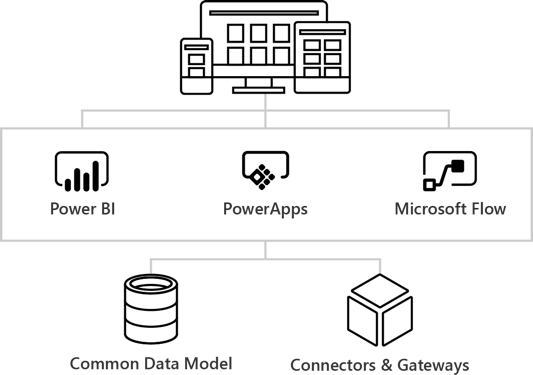
The main intention is to empower everyone with one connected app platform…Power Platform combines the robust power of PowerAppsPowerBI, and Microsoft Flow into one powerful business application platform –  providing quick and easy app building and data insights.

This is part one of 6 series blog posts helps you to understand the basics, in and out of this entire all new ecosystem. Upcoming blog posts will give you a deep insight on covering every individual aspect on this marvellous platform.
Power-platform-2

Common Data Model:

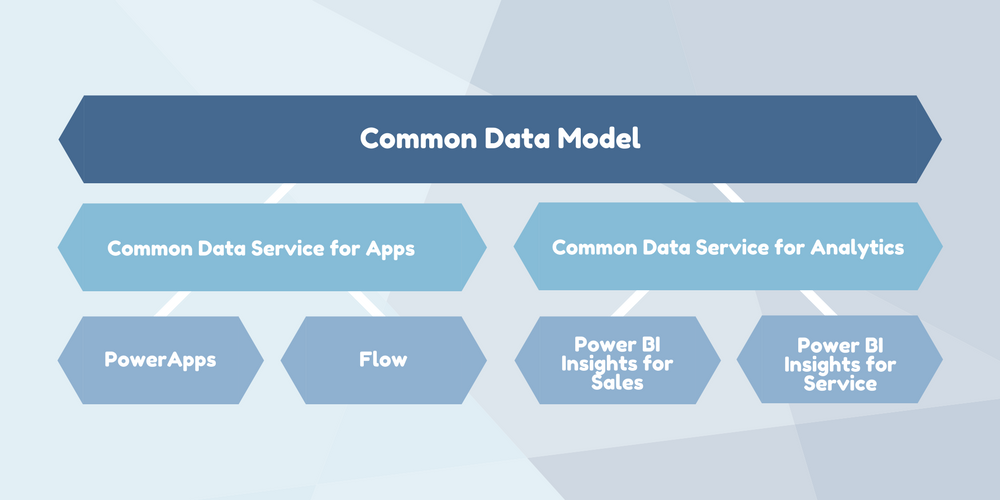
The Common Data Model (CDM) is the shared data language used by business and analytical applications. CDM bridges the gap between disjointed data repositories, granting easier cross-platform business reporting.
Copy-of-Copy-of-Common-data-service

It consists of a set of a standardised, extensible data schemas published by Microsoft and partners that enables consistency of data and its meaning across applications and business processes. This allows apps to integrate and share data with each other without the need for extensive, custom integration by providing a centralized point where systems can come together and connect.

The Common Data Model is a secure method for exposing Microsoft databases that allows developers to build custom connections with other databases.

Common Data service:

The heart of the Microsoft Power Platform is the Common Data Service for Apps(CDS). These applications handle your data through the use of Microsoft’s Common Data Service for Apps (CDS). CDS is a cloud-based tool hosted on Azure which allows you to securely store and manage your business data. Data within the CDS is stored within a set of entities, a standard set of entities are included, however custom entities can be created for specific requirements to your organization and populate them with data using Power Query. The CDS for Apps is built on the Common Data Model.

Dynamics 365 applications, like Dynamics 365 for Sales, Service or Talent also use the Common Data Service to store and secure data used by the applications. This enables you to build apps using PowerApps and the Common Data Service directly against your core business data already used within Dynamics 365 without the need for integration. You can think of Common Data service as a common store allows for an easier app building experience, and a single set of logic to maintain and operate over the data.

Power Apps:

Power Apps enables users fostering via No Code solutions which improves productivity and reduces the time for the delivery.
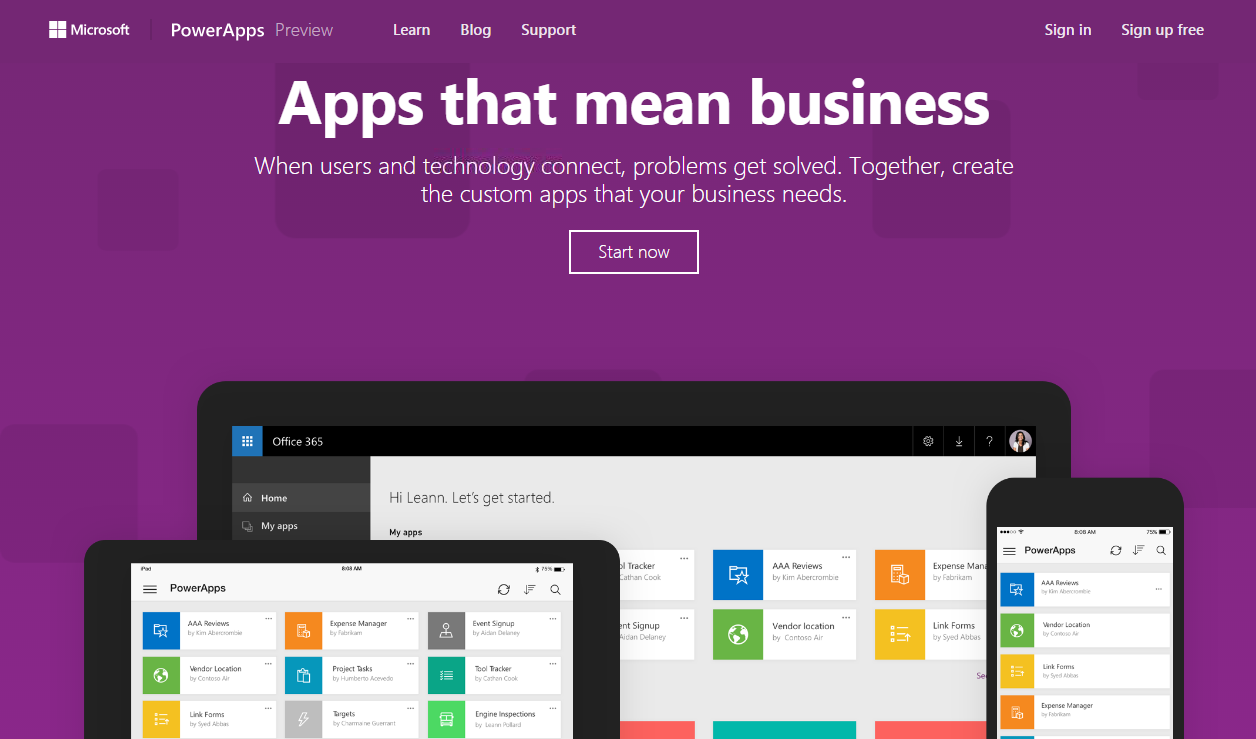
image15

PC Mag. had rated the power apps as the best low code solutions available in the market..if you haven’t gone through this..read this article..

PowerApps at its core is a Platform as a Service. It allows you to create Mobile Apps that run on Android, iOS, Windows (Modern Apps) – and with almost any Internet browser..Read more about Power Apps in the upcoming blog post here

Microsoft Flow:

Microsoft Flow is an online workflow service that automates actions across the most common apps and services and a trigger based system.microsoft-flow-templates
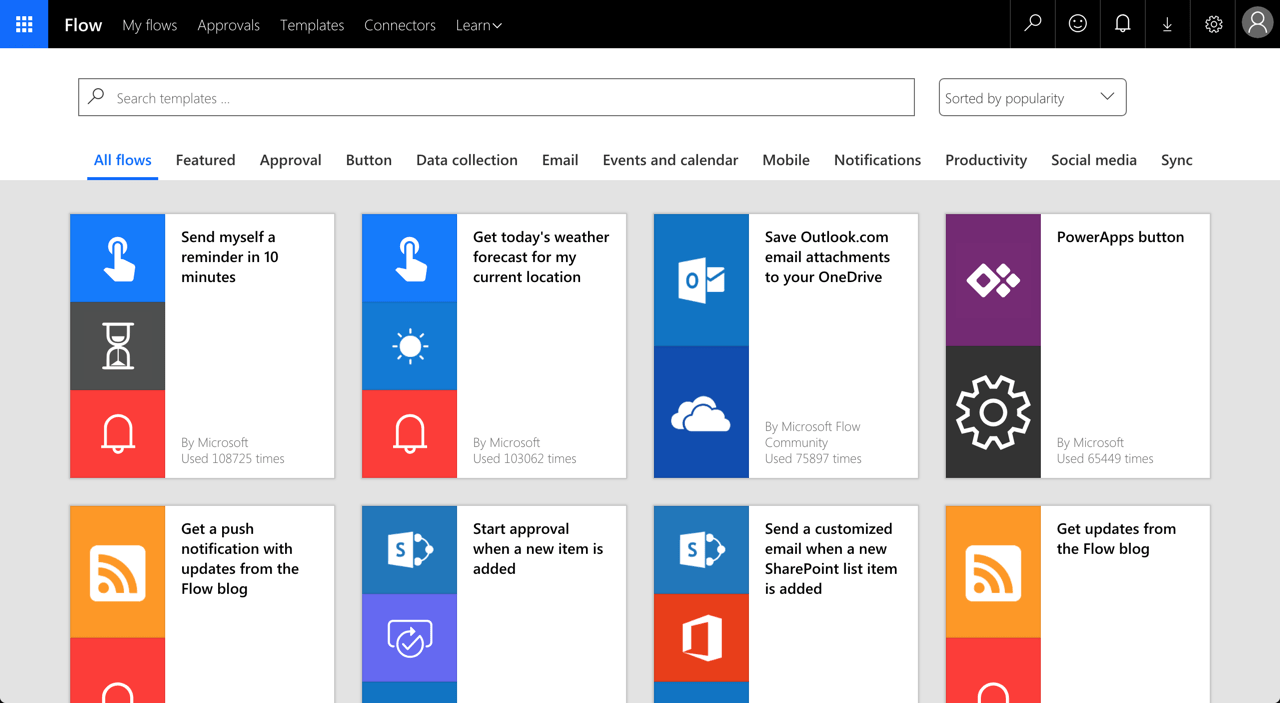
In total there are connectors for 323 applications and protocols at the time of writing, and you can write your own if you need a different one. You can read more about Flow and automating your business processes here…

Power BI:

Microsoft Power BI is a collection of software services, apps, and connectors that work together to turn your unrelated sources of data into coherent, visually immersive, and interactive insights. Power BI can be simple and fast, capable of creating quick insights from an Excel workbook or a local database.
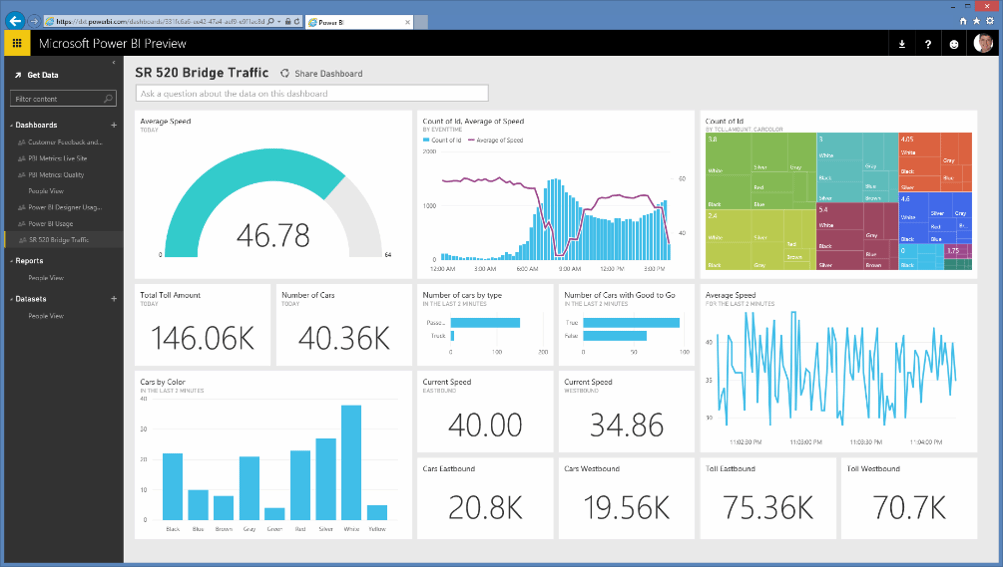
sCM_Power-BI-Preview

At the users flexibility….we can use…Windows desktop application called Power BI Desktop, an online SaaS (Software as a Service) service called the Power BI service, and mobile Power BI apps that are available on Windows phones and tablets, and also on Apple iOS and Google Android devices.

These three elements—Desktop, the service, and Mobile apps—are designed to let people create, share, and consume business insights in the way that serves them, or their role, most effectively.

Read more capabilities of Power BI here…

Connectors & Gateways:

Nevertheless we discussed all the other components as part of this framework, connectors and gateways plays a major role…Connectors are essentially proxy wrappers around the APIs provided by services that allow Microsoft Flow, PowerApps and Logic Apps to easily interact with the service. You can read more about connectors and gateways and much more in upcoming post…

That’s it for today…thank you for reading…

Cheers,

PMDY